Quick answer: A pocket sprung mattress feels bouncier and more responsive, and it tends to sleep cooler. A memory foam mattress moulds to your shape and absorbs movement, so it suits light sleepers who share a bed. Choose pocket sprung if you like to move around. Choose memory foam if you want to feel cradled and you share a bed with a restless partner.
Most people ask which is better. That is the wrong question. A well-made pocket sprung mattress beats a poorly made foam one, and the other way round. The real question is which feel suits you, and how to tell the good ones from the weak ones.
How a Pocket Sprung Mattress Works
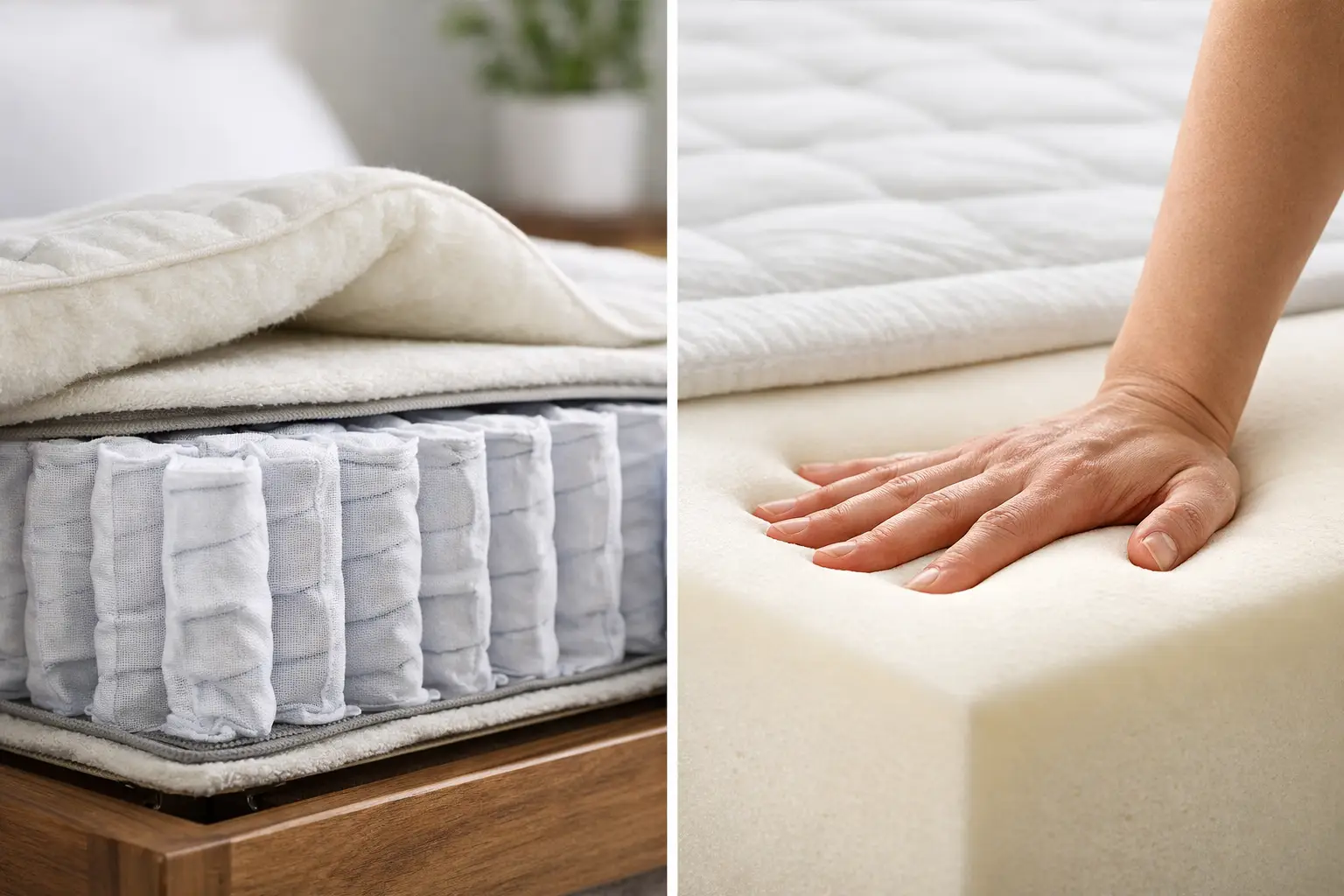
Each spring sits in its own fabric pocket, so every spring moves on its own. That is why a pocket sprung mattress follows your body rather than sagging in one big dip. On top of the springs sit layers of padding, such as fibre, wool or thin foam, which provide the comfort.
The feel is lively. You sit on top of the mattress rather than sinking into it, and it is easy to change position in the night. The gaps between the springs let air move through, which is why sprung mattresses generally sleep cooler than dense foam.
How a Memory Foam Mattress Works
Memory foam is a dense, responsive foam that softens with body warmth and pressure and shapes itself around you. That gives the slow, sinking feel that people either love or find hard to move on. It is also good at stopping movement from travelling across the bed, so if your partner gets up at six, you are less likely to notice.
Retailers such as ElephantBeds list memory foam and pocket sprung ranges separately, which helps when you want to compare the two feels directly. The downsides are well known. Some people find foam warm, particularly with a thick top layer. The slow response can make turning over feel like effort. And cheaper foam tends to wear sooner. Low-density foam develops a dip faster than a denser one, and once it has a body-shaped hollow it does not spring back.
Side by Side
Feel. Pocket sprung is bouncy and supportive. Memory foam is soft and enveloping.
Temperature. Pocket sprung usually sleeps cooler. Memory foam can feel warmer, depending on how it is made.
Movement. Memory foam absorbs motion better. Pocket sprung transmits more, though a good pocket sprung with plenty of padding is fine for most couples.
Moving around. Pocket sprung makes it easier. Foam takes more effort.
Lifespan. Decent mattresses of either type are often quoted at around seven to ten years. Budget foam can fall short of that, and so can thin, cheap sprung ones.
Weight. Foam mattresses are usually heavier, which matters when you turn them or carry them upstairs.
A Worked Example
Take a couple, one a light sleeper who wakes at every sound, the other a restless sleeper who turns over a dozen times a night. On a basic pocket sprung mattress, every turn travels across the bed. A memory foam mattress, or a hybrid with foam layers over springs, would settle that argument far better.
Now take a single sleeper who runs warm and likes to sit up in bed to read. A dense memory foam mattress can feel too hot and too sinky for them. A pocket sprung mattress with a firm edge would suit them better.
Weight matters too. Heavier sleepers tend to sink further into foam and may find a firmer mattress, or one with a deeper layer of springs, gives them the support they want. Lighter sleepers sometimes find a firm sprung mattress hard.
The Middle Ground
If you cannot decide, there is a middle option. Hybrids combine springs with foam or latex layers. They give some of the bounce and airflow of springs with some of the contouring of foam. Latex is another alternative: springy, durable and good at holding its shape, though it usually costs more.
Most retailers group Mattresses by type, so you can compare pocket sprung, memory foam and latex ranges next to each other before you decide.
How to Test a Mattress Properly
A minute in a shop tells you very little. Lie down in the position you actually sleep in, on your side if you are a side sleeper, and stay there for ten minutes. If you share a bed, bring your partner and lie down together. Roll over once or twice. Notice how easy that is.
Check these as you test:
- Does your spine feel straight when you lie on your side, not dipped or tilted?
- Can you turn over without effort?
- Do you feel the movement when your partner turns?
- Do your shoulders and hips feel comfortable, or pressed?
It is also worth asking what the mattress is made of and how deep the comfort layers are. A thin layer of padding over springs will feel firm at first and tired sooner. A thick layer of cheap foam will feel soft in the shop and sag within a few years.
Which Should You Choose?
Go for pocket sprung if you like a bouncy, supportive feel, sleep warm, or change position a lot. Go for memory foam if you want to feel cradled, you share a bed with someone restless, or you are a light sleeper. Look at hybrids if you want a bit of both.
Whichever you pick, spend the time on the test. The best mattress on paper is not always the best one for the person lying on it.